On this page
Look, building a customer service team structure is one of those decisions that'll either make your life easy or turn it into a slow-motion disaster. Get it dialled in, and you'll have happy customers, fast responses, and costs you can actually sleep with. Get it wrong? Burnt-out agents, frustrated users, and money disappearing into a black hole.
Who should actually read this? Founders, ops managers, and team leads running startups or small-to-mid-sized businesses. If you're building a support team from scratch or fixing one that's already broken, you're in the right place. It's also for anyone sick of those bloated enterprise models that cost a fortune and move like molasses.
When do you use this guide? Right when you're about to hire that first support person. Or when you're scaling from a tiny team to something bigger. Maybe you're redesigning a current mess into something that actually works.
When should you skip this? If you've already got 50+ agents and a dedicated ops crew, some of this will feel like kindergarten. Stick with the scaling and future sections.
Supplo is not affiliated with any app or website. Please follow each app's terms and local regulations.
Quick Answer
- For startups (1–5 people): Flat structure. Everyone supports. Hire your first generalist when you're drowning at 50–100 tickets/week.
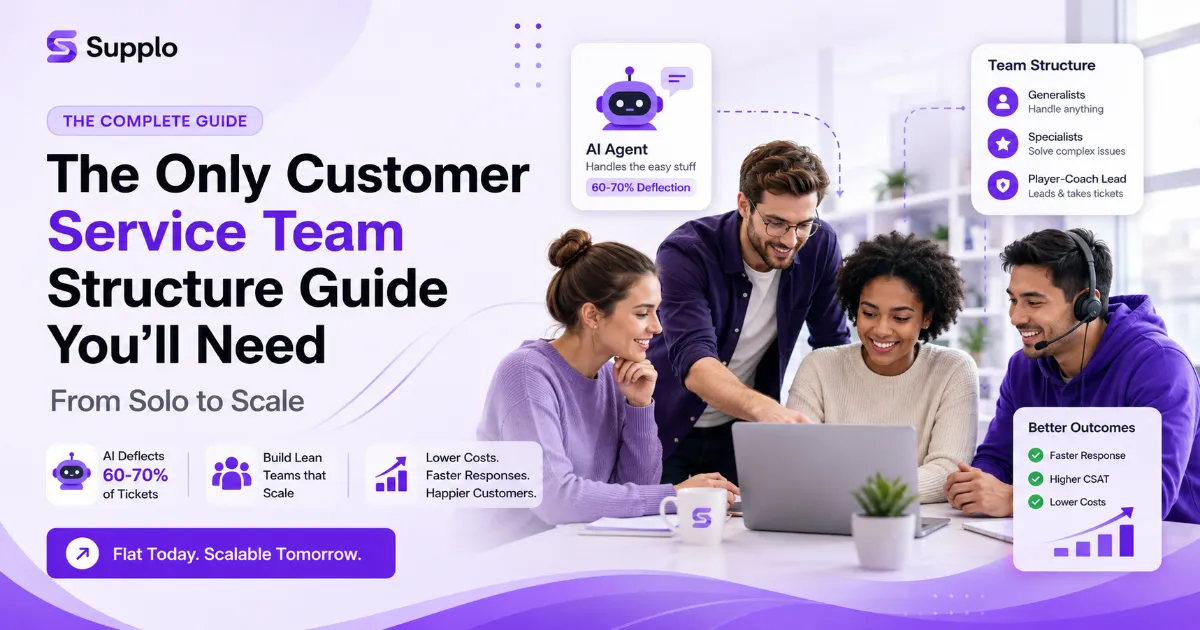
- For small businesses (5–20 employees): Tier 0 + Generalist model. Let an AI agent deflect 60-70% of the boring stuff. Keep 1-3 humans for everything else.
- For scaling teams (10+ agents): Player-coach leads first, then specialists. One team lead who actually takes tickets, then adds billing and technical folks.
- The golden rule: Don't even think about building a traditional L1/L2/L3 ladder until you have 10+ agents. Otherwise, you're just creating handoff chaos.
- The future: Human-AI hybrid. AI handles the easy stuff, humans handle the hard stuff, and everyone works faster with an AI co-pilot.
What's the Best Customer Service Team Structure for a Startup?
For early-stage startups, the best structure is "everyone handles support, starting with the founder." Once you're drowning at 50–100 tickets a week, hire a single generalist who owns the whole inbox. Not a specialist. And definitely don't build tiers until you're looking at 500+ tickets weekly.
The "Founder-Does-It-All" Phase
Let's be real, founder support is ugly. It's messy, it's time-consuming, and it'll make you want to throw your laptop out the window. But it's also essential. Nothing forces you to understand your customers better than responding to their angry emails at 11 PM. You'll discover product issues, hear raw feedback, and identify market-fit problems that no survey could ever surface. At this stage, your customer service team structure is brutally simple: you're the whole team.
How to survive the founder phase:
- Using a shared inbox personal email is a black hole where tickets go to die.
- Build canned responses for the top 10 questions you see every week.
- Start measuring first response time (FRT) and CSAT from day one. These numbers are your early warning system.
First Hire Strategy (Generalist vs. Specialist)
Your first support hire should be a generalist. Think of them as a "customer advocate," not just a ticket-closing machine. This person needs to triage problems, fix simple issues, know when to escalate, and, most importantly, document everything they learn. A specialist (like a dedicated support engineer) is too narrow at this stage. You'll end up handling most tickets anyway.
The first support hire should be a generalist who owns the inbox, not a specialist who only owns a queue.
Small Business Customer Service Team Structure That Actually Works
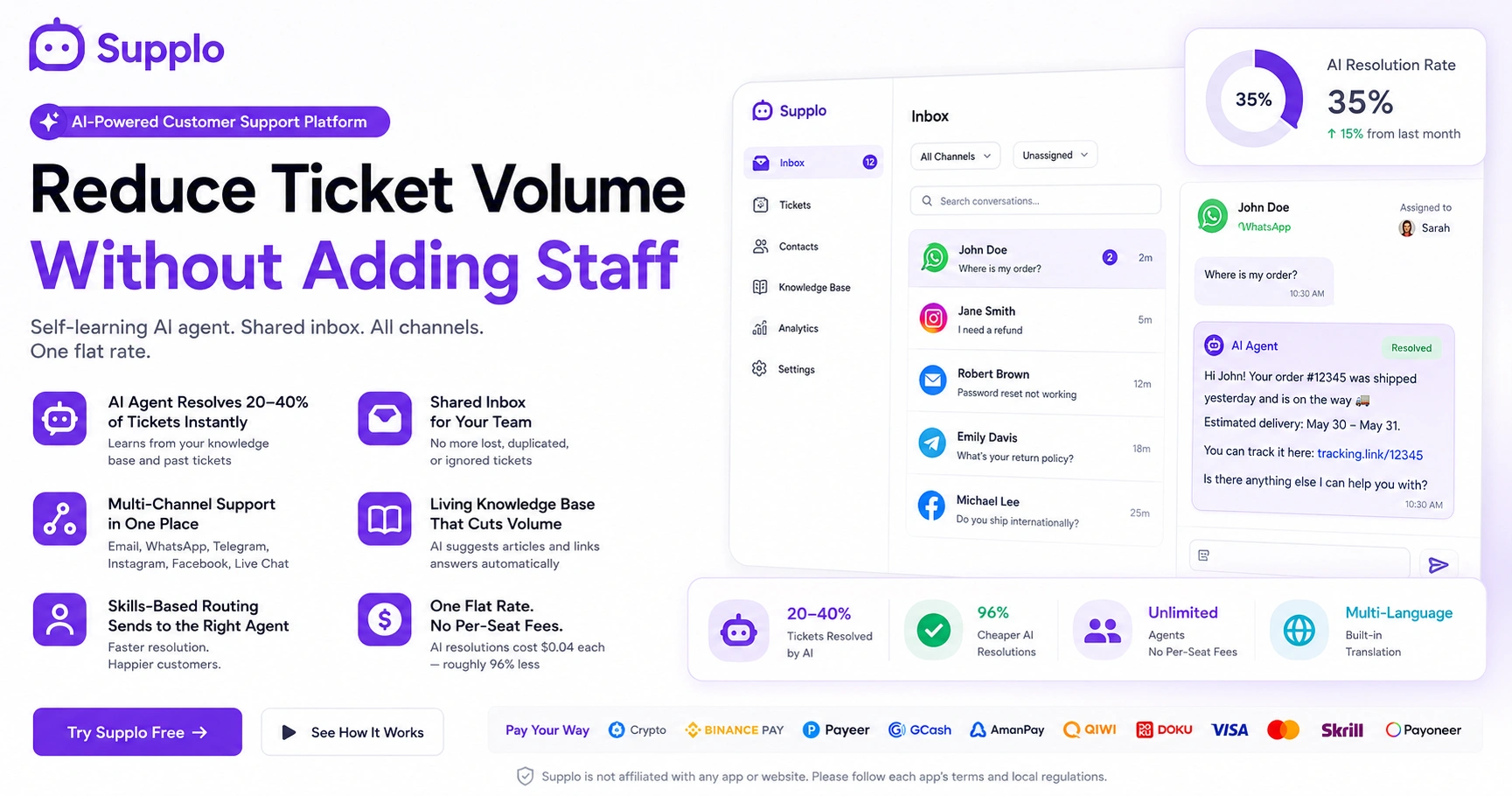
For most small businesses (5–20 employees), the smartest move is a "Tier 0 + Generalist" model. Here's how it works: an AI agent handles Tier 0 things like password resets, order status, and FAQs. Then 1–2 human generalists handle whatever the AI can't figure out. This keeps costs low and response times fast without needing a complicated escalation ladder.
Tier 0 with AI vs. Tier 1 with Humans
The biggest mistake small businesses make? Hiring humans to do work that a simple AI agent could handle in milliseconds. Tier 0 is everything that can be automated: "Where's my order?" "How do I reset my password?" "What are your hours?" Let a self-learning AI agent handle that. Your humans focus on Tier 1 refunds, complaints, and product questions that need actual thinking.
Checklist for implementing Tier 0:
- Build a knowledge base with the 20 most common questions.
- Train your AI agent on that knowledge base.
- Set a target deflection rate of 60% or more in the first month.
- Monitor what the AI can't answer and update the knowledge base weekly.
The "Swiss Army Knife" Team Model
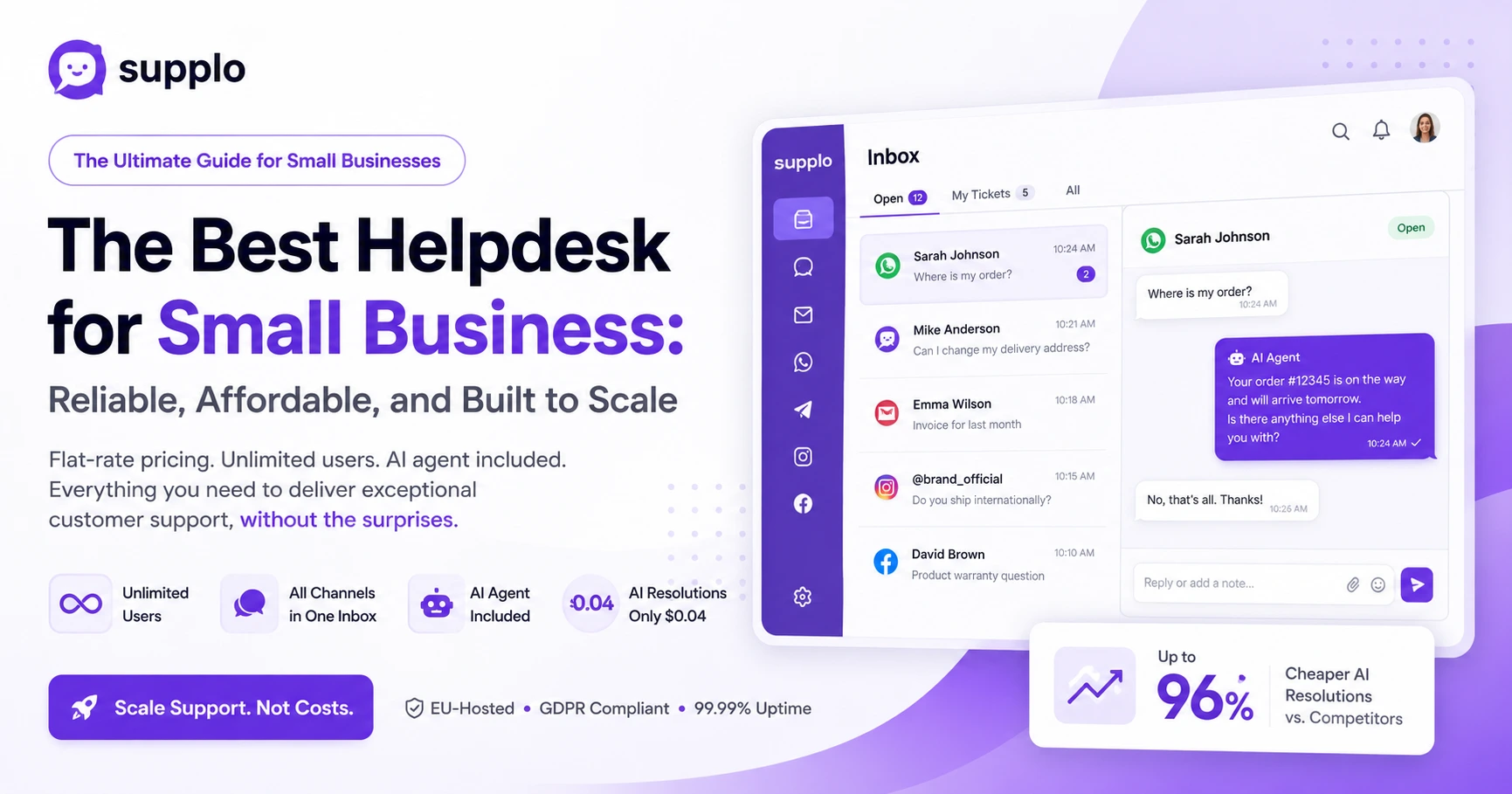
Your human generalists need to be cross-trained on product, billing, and technical issues. They're your Swiss Army knife capable of handling anything that comes their way. Use a shared inbox with multi-channel routing to keep email, chat, WhatsApp, and everything else in one place. Weekly "bug hunt" syncs prevent the support team from siloing information and missing patterns.
The Lean Customer Support Organization: Doing More With Less
Here's the philosophy: remove friction before adding headcount. That means investing in a knowledge base, self-service options, and a decent AI agent before you even think about hiring your third or fourth person. Aim for an AI deflection rate of 70%+ so your small team handles only complex, high-value conversations.
Removing Friction Before Adding Headcount
Measure what matters: Deflection rate, CSAT, and first-response time. Ignore raw ticket volume, it's a vanity metric. Every new hire should reduce the team's burden, not just process more tickets. If your deflection rate is below 50%, fix your knowledge base and AI agent before touching the hiring budget.
Pitfall to avoid: Don't hire a manager who never handles tickets. That creates a bottleneck where the manager reports on metrics but doesn't solve actual problems—worst of both worlds.
Automation-First vs. Human-First Philosophy
Automation handles the "what" and "when" password resets, order lookups, and basic procedural stuff. Humans handle the "why" and "how" refund decisions, product feedback, and complex technical problems. This philosophy lets you build a lean customer service team structure that scales without adding headcount at every turn.
Automation should handle the "what" and "when"; humans handle the "why" and "how."
- Explore how a self-learning AI agent can boost your deflection rate.
- See AI agent pricing at $0.04 per resolution to calculate your savings.
When (and How) to Scale Your Customer Service Team Structure
You know it's time to scale when your team has been over capacity for more than two weeks, response times are slipping, or your CSAT drops below 85%. The right move here is to hire a team lead who can also handle ticket calls, call them a "player-coach," and then add specialists (billing, technical) in the next phase. Whatever you do, don't hire four generalists at once. Hire one lead, then specialists.
The 3 Red Flags You're Ready to Scale
- Your best agent is burning out and starting to check out.
- Tickets are piling up despite overtime and weekend work.
- You're losing customers, and the exit survey says "slow support."
Troubleshooting tip: If your deflection rate is below 60%, fix that before hiring anyone. Adding more humans won't fix the root problem; you're just throwing bodies at a process failure.
Team Lead or Player-Coach?
A player-coach lead handles tickets AND manages the team. This is critical for small teams because it keeps the lead connected to the frontline reality. Create a dedicated manager role only when you have 10+ agents. Before that, a pure manager is just overhead.
Don't hire 4 generalists at once, hire one lead, then specialists.
Different Customer Service Structures: Which Model Fits Your Business?
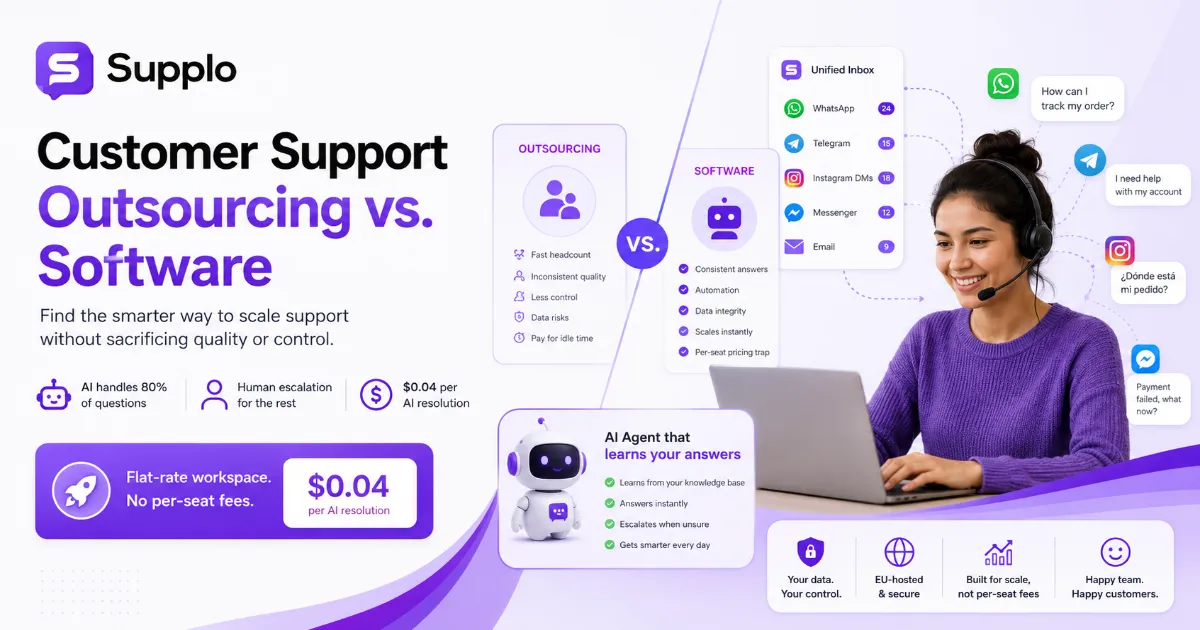
There are four primary models: Tiered (L1/L2/L3), Pod-based (teams own a segment), Follow-the-Sun (global shift coverage), and Flat (everyone handles everything). Tiered works for large organizations with complex products. Pod-based works for account-driven businesses with VIP clients. Follow-the-Sun is for global teams that need 24/7 coverage. Flat structures work best for small teams of 10 people or fewer.
Tiered Support (Level 1, 2, 3)
Best for B2B SaaS with multiple product lines. L1 handles simple tickets, L2 handles complex ones, and L3 handles technical escalations. The downside? Handoffs slow down resolution—a lot.
Pod-Based Teams (Account-Centric)
Best for agencies or businesses with high-value clients. A pod owns a specific segment (e.g., Enterprise, SMB) and handles everything for that group. Builds deeper relationships but can be inefficient during low-volume periods.
Follow-the-Sun (Global Coverage)
Best for 24/7 support without forcing anyone to work night shifts. Teams in different time zones hand off tickets seamlessly. Requires strong handoff documentation and rock-solid processes.
Checklist for choosing your model:
- Under 10 agents? Use a flat structure.
- 10–30 agents with a simple product? Use a flat + specialist model.
- 30+ agents with complex products? Use a tiered structure.
- Global customers? Use Follow-the-Sun.
How to Build a Growing Customer Support Team Structure (Without Breaking the Bank)
Use a phased approach. Phase 1 (1–3 agents) = flat structure + AI agent. Phase 2 (4–8 agents) = add a player-coach lead and a specialized Tier 2. Phase 3 (9+ agents) = full tiered structure with team leads, QA, and reporting. The secret? Use a platform that includes AI, inbox, and routing from day one so you don't need separate tools that don't talk to each other.
Phased Hiring: The 3-Stage Growth Plan
- Phase 1: AI handles 60-70% of tickets; humans handle the rest: one generalist + founder backfill.
- Phase 2: Add a player-coach lead and a billing specialist. AI now deflects 70%+.
- Phase 3: Full tiered structure with team leads, QA, and reporting. Consider a support engineer for tough technical escalations.
The Role of the Self-Learning AI Agent
The self-learning AI agent is your secret weapon. It learns from your knowledge base and conversations, automatically updating itself as new issues pop up. This means you can deflect more tickets without adding headcount. It's the closest thing to cloning your best agent.
Supplo offers a flat monthly rate with no per-seat fees, making phased growth predictable.
Ready to build a structure that scales without the overhead? Try Supplo's AI agent and shared inbox free for 14 days. No credit card needed. Start My Free Trial
Customer Service Department Structure: The Essential Roles You Need
Here are the non-negotiable roles at any size: Customer Support Agent (generalist) and a Support Lead (even if it's the founder wearing that hat). Once you hit 10+ agents, add a QA Specialist, a Knowledge Manager, and a Support Engineer. Whatever you do, avoid creating a "Manager" role that doesn't handle tickets; that's a cost center, not a value driver.
The Non-Negotiable Roles (At Any Size)
- Customer Support Agent: Handles tickets, documents issues, and escalates when needed—the frontline.
- Support Lead: Manages the team, handles complex tickets, and reports metrics. Can be a player-coach.
The "Nice-to-Have" Roles (For Later Stages)
- QA Specialist: Reviews ticket quality, coaches agents, and maintains CSAT scores.
- Knowledge Manager: Owns the knowledge base, trains the AI, and updates FAQs.
- Support Engineer: Handles technical escalations and works with the product team.
Avoid creating a "Manager" role that doesn't handle tickets that are cost centers, not value drivers.
The Single Biggest Mistake in Customer Support Team Organization
Building a traditional tiered support structure (L1, L2, L3) when you have fewer than 10 agents. I've seen these kill teams. It creates handoffs, rework, and slower resolution times. Small teams should use a flat or "swarm" model where the first person to touch the ticket owns it to resolution, backed by an AI agent for deflectable issues.
Why Tiered Support Kills Velocity (For Small Teams)
Tiered support with fewer than 10 agents creates handoff chaos. An L1 agent spends 5 minutes documenting a ticket, then an L2 agent spends 5 minutes reading it, then escalates to L3. That's 15 minutes of overhead before anyone actually solves the problem. With a flat structure, one agent solves it in 5 minutes using simple math.
The Flat Structure Alternative
The swarm model means the first person to touch the ticket owns it until it's resolved. If they can't solve it, they pull in help from the team (like a swarm) rather than passing the ticket through a chain of command. This is faster, more empathetic, and builds greater skills across the team.
If your code fails or your AI deflection rate is low, we can help. The problem is usually a routing issue or a knowledge gap. Fix My Drop-Off
Case Study: How a 4-Person Team Handled 1,000+ Tickets (Without Burning Out)
We worked with a B2B SaaS startup (check out our PVA Pins case study) that grew from 2 to 4 agents while ticket volume tripled. They used a flat structure + an AI agent (Supplo) to deflect 65% of inquiries. 2 generalists and 1 lead handled the remaining 35%. Zero overtime. CSAT of 94%. It's possible.
The Tool Stack That Made It Possible
- Supplo: AI agent + inbox + multi-channel routing in one platform.
- Single source of truth: No more switching between email, chat, and social tools like a circus juggler.
Specific Workflow Example
- The customer sends a message via WhatsApp.
- AI agents check the knowledge base and resolve 65% of issues automatically.
- Complex tickets (e.g., "My account is locked and I can't log in") get tagged and routed to the appropriate human.
- The human sees the full conversation history, resolves the issue, and the AI learns from the response.
40% faster first response time, no burnout, and a CSAT of 94%.
See how a 4-person team scaled their support without hiring more people.
The Future of Customer Service Team Structure Models (AI-Augmented)
The Human-AI Hybrid Model. AI handles Tier 0 and 1, humans handle Tier 2+, and an AI "co-pilot" assists humans in real-time. Predictive routing sends tickets to the best-suited human before they even see the queue. This reduces the need for large teams while maintaining or improving quality.
The Human-AI Hybrid Model
AI deflects, humans solve, simple division of labour. The AI handles routine requests (password resets, order status), and the human team handles anything that requires empathy, creativity, or judgment. The AI "co-pilot" suggests responses to speed up human replies. It's like having a super-smart assistant who never sleeps.
Predictive Routing and Agent Assist
Predictive routing uses AI to learn which agent handles each issue type best. Tickets are automatically assigned to the best-suited agent, no manual triage needed. Agent assist suggests responses based on the conversation context, cutting response time in half. This is where the future of the customer service team structure is headed.
The best model is an AI-human hybrid, where AI handles the routine, and humans handle the critical.
Ongoing support for teams of any size. Flat monthly rate. No per-seat fees. AI resolutions at $0.04 each. The structure you need, without the enterprise invoice. See Pricing
Compare Supplo to category leaders to see how our AI-augmented model stacks up.
Key Takeaways
- Start with a flat structure and a generalist.
- Use an AI agent to deflect 60-70% of simple tickets.
- Avoid tiered support until you have 10+ agents.
- Hire a player-coach lead before adding specialists.
- The future is a Human-AI Hybrid model that reduces headcount needs.
FAQ
What is the best customer service team structure for a small business?
A "Tier 0 + Generalist" model is best. Use an AI agent to handle FAQs and simple requests, while 1-3 human generalists handle anything that requires a personal touch or complex problem-solving. This is the most cost-effective way to deliver fast, reliable support.
How do I transition from founder-led support to a support team?
Start by hiring one generalist who owns the entire inbox. Let them document every issue they see, then use that data to build a knowledge base and train an AI agent. Once you hit 200+ tickets per week, add a second generalist.
Should I use a tiered support structure for my startup?
Not until you have at least 10 agents. Tiered support creates handoffs between L1, L2, and L3, which slows resolution times. Use a flat or "swarm" model where the first agent to touch the ticket owns it until resolution.
What roles are essential in a customer service department?
The non-negotiable roles are Customer Support Agent and a Support Lead (even if it's a player-coach). Once you have 10+ agents, add a QA Specialist, a Knowledge Manager, and a dedicated Support Engineer for technical escalations.
How do I scale my support team without hiring too fast?
Measure your deflection rate, CSAT, and first-response time. If your AI agent is deflecting 60%+ of tickets and your agents are still over capacity, then hire. Always hire a player-coach lead before adding more generalists.
What is the difference between a flat and a tiered support structure?
A flat structure means every agent handles every type of issue (no handoffs). A tiered structure has L1 handling simple issues, L2 handling complex ones, and L3 handling technical escalations. Flat is for small teams; tiered is for large teams.
Can AI replace a customer support team?
AI can replace Tier 0 and Tier 1 functions, but it cannot replace a human's empathy, creativity, and judgment for complex issues. The best model is an AI-human hybrid, where AI handles the routine, and humans handle the critical.
What is a deflection rate, and why does it matter?
Deflection rate is the percentage of tickets that are resolved by AI or self-service before a human touches them. A high deflection rate (60%+) indicates your team is focused solely on complex issues, lowering costs and reducing burnout.
Compliance note: Supplo is not affiliated with any app or website. Please follow each app's terms and local regulations.