On this page
Let's be real for a second. Measuring chat support quality isn't about making your dashboard look pretty; it's about knowing whether your support team (or AI) is actually fixing problems and building trust that lasts. Too many teams fall into the trap of optimising for speed while forgetting substance. Or they track metrics that look good on paper but say nothing about customer loyalty.
This guide gives you the KPIs that actually matter and a practical framework to measure chat support quality without drowning in data.
This is for support ops managers, CX leaders and anyone who suspects their current metrics aren't telling the full story. If you're building a quality process for both AI agents and humans, you're in the right place.
Quick Answer
- Focus on resolution and reliability: Prioritise First Contact Resolution (FCR) and low Repeat Contact Rate over mere speed.
- Combine efficiency, satisfaction and accuracy with a balanced set of metrics, including FCR, CSAT, CES and resolution rate.
- Implement a sampled QA framework: Score 10-20 chats per agent/AI per week using a consistent rubric.
- Distinguish vanity metrics from true indicators: Ignore chat volume and average wait time for outcomes like issue resolution.
- Close the loop: Use analytics to improve both AI performance and human agent training.
Why Measuring Chat Support Quality Demands a Reliability Mindset
Here's the thing: customer support isn't just about replying fast. It's about customers trusting that your team or AI will actually solve their problem. Measuring chat support quality starts with a reliability mindset: tracking whether every interaction moves the needle toward a clean resolution, not just a quick one. Without this, you risk optimising for speed while silently burning trust.
Reliability means the AI or agent resolves the issue fully on first contact. Not just answering the question, solving it. Trust builds when the system consistently hands off to a human at the right moment. Not too early, not too late.
Vanity metrics like first response time can mask deeper problems, such as repeat contacts or unresolved tickets. Teams that prioritise reliability see lower churn and higher CSAT over the long run. It's that simple.
The Core Chat Support Quality Metrics You Can't Ignore
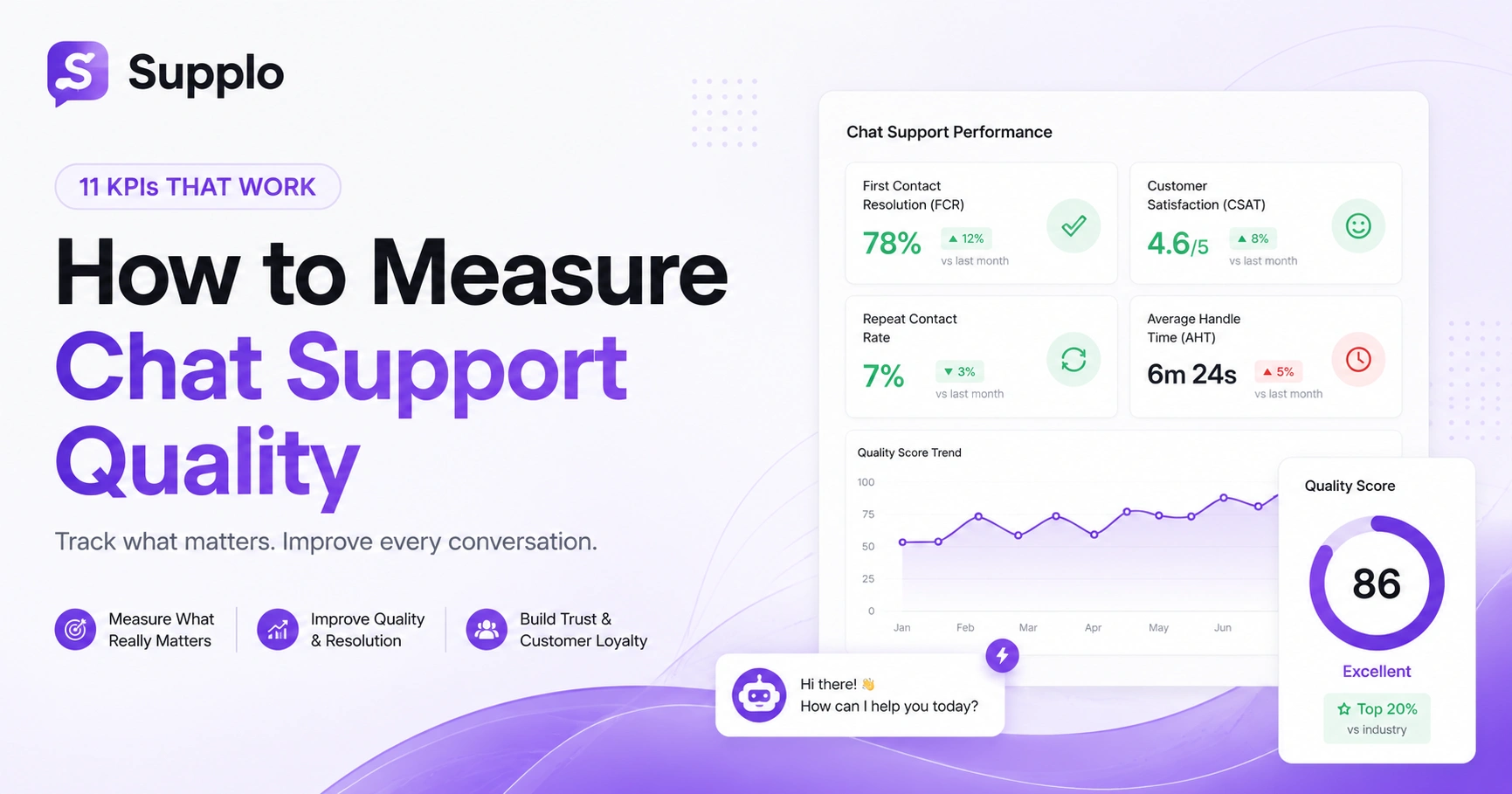
Chat support quality metrics fall into three pillars: efficiency (FCR, AHT), satisfaction (CSAT, CES) and accuracy (resolution rate, deflection rate). You need at least one metric from each pillar to get the full picture. Most teams over-index on efficiency and forget accuracy and that's where reliability lives.
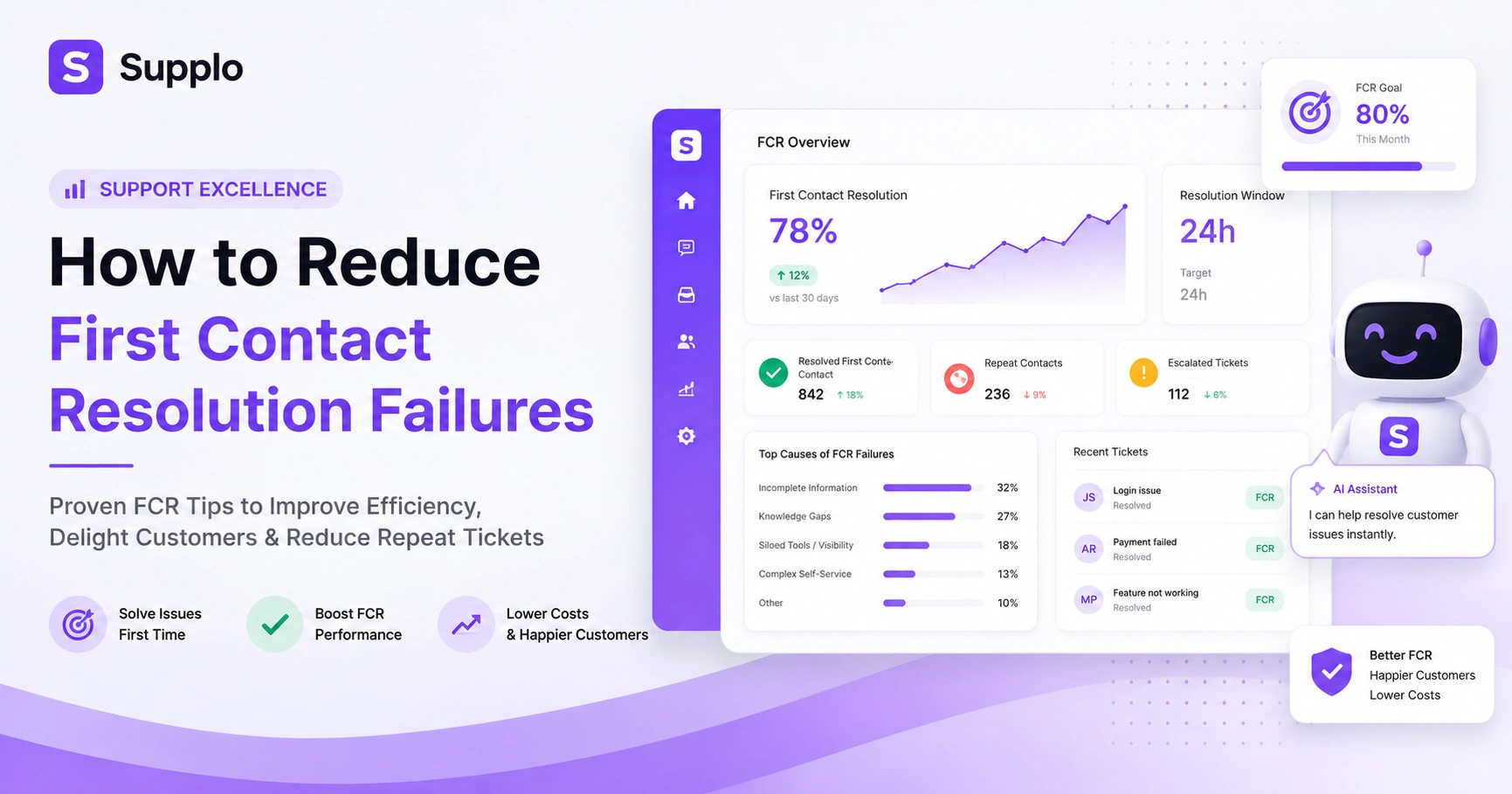
First Contact Resolution (FCR) is your strongest indicator of reliability. Average Handle Time (AHT) matters, but only when paired with satisfaction scores. Customer Effort Score (CES) indicates how easy it was to get help and the deflection rate (for AI) shows whether self-service is actually working. These apply whether you're managing website chat or an email ticketing system.
How to Set Up a Chat Support Quality Assessment Framework
First, define what quality actually means for your brand. Is it fast resolution? Accurate answers? Human warmth? Then build a scoring rubric with 4–5 concrete criteria, things like tone accuracy, resolution completeness and handoff timing. Score a random sample of 10–20 chats per agent per week and track trends monthly.
Use a 1–5 scale for each criterion and weigh them by priority. Include a category for AI handoff quality if you use automated support. Calibrate the rubric quarterly based on customer feedback. And please, don't score every single chat. Sampling reduces bias and burnout.
Steps to Set Up Your Framework:
- Define Quality: What does successful chat support look like for your specific business?
- Develop a Rubric: Create a scorecard with 4-5 measurable criteria, each rated on a 1-5 scale.
- Weight Criteria: Assign importance to each criterion (e.g., Resolution Completeness might be weighted higher than Tone).
- Determine Sampling Strategy: Select 10-20 random chats per agent or AI interaction type weekly.
- Score and Calibrate: Consistently apply the rubric, then review and adjust it quarterly.
- Analyse Trends: Look for patterns over months, not days. Identify common strengths and weaknesses.
Start measuring better today. Grab a free 14-day trial at Supplo and see how our AI agent resolves up to 80% of tickets automatically, so your quality metrics reflect real resolutions, not just fast replies, no credit card required.
Key Performance Indicators for Chat Support That Actually Predict Retention
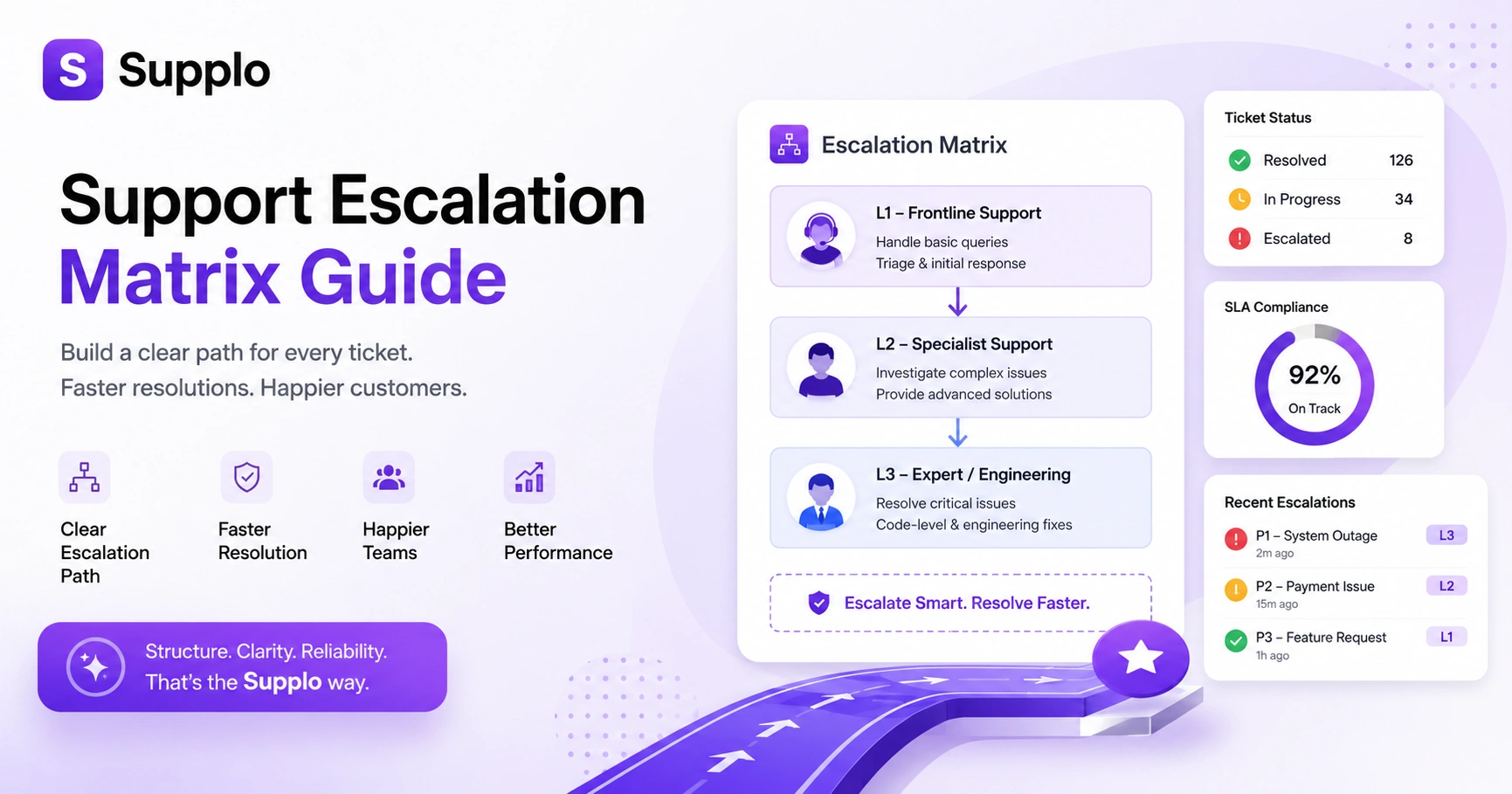
Retention-driven KPIs go beyond CSAT. Look at Repeat Contact Rate (how often the same customer returns about the same issue) and Escalation Rate (how often chats need a senior agent). A low Repeat Contact Rate is the single strongest predictor of long-term customer loyalty.
Repeat Contact Rate under 10% is a strong benchmark for most industries. An Escalation Rate above 20% signals a knowledge gap in first-line support. Sentiment shift (positive to negative mid-chat) is a leading churn indicator. Track these monthly, not weekly, to avoid noise from seasonal spikes.
The Right Way to Evaluate Chat Support Effectiveness with CSAT and CES
CSAT measures satisfaction after a single interaction. CES measures the effort a customer had to exert. Both are essential, but they answer different questions. Use CSAT to gauge emotional response and CES to predict future behaviour; low-effort experiences drive retention more than high-satisfaction ones alone.
Send CSAT surveys immediately after chat, not hours later. CES is most reliable when asked right after resolution, not at the start. Combine both scores into a single Effort-Adjusted Satisfaction metric. And benchmark against your own historical data, not generic industry averages.
Live Chat Performance Metrics: Speed vs Resolution
Speed metrics (first response time, average handle time) are easy to track but dangerous to optimise in isolation. A fast, wrong answer is worse than a slower, correct one. The trade-off is real. The sweet spot is training your AI or team to aim for the right first time within a reasonable time window, not the fastest possible.
Set a maximum first-response time (say, under 30 seconds), but don't penalise longer handle times if resolution is high. Track time to resolution instead of handle time for complex issues. This is especially important for channels like WhatsApp customer support. AI handles fast, simple queries; humans tackle slower, high-resolution work. Use a speed-to-resolution ratio to fairly compare teams.
How to Measure Live Chat Effectiveness Without Chasing Vanity Stats
Measuring live chat effectiveness means ignoring the easy numbers- chat volume, average wait time- and focusing on outcomes. Was the issue resolved? Did the customer return? Did they buy it again? Vanity stats make your dashboard look good but don't tell you if support is actually working.
Instead of chats per day, track resolutions per day. Replace average wait time with median wait time to avoid outlier skew. Measure customer re-contact rate within 7 days as a quality check. And don't report agent-specific numbers publicly; compare teams, not people.
Using Chat Support Analytics to Close the Loop Between AI and Humans
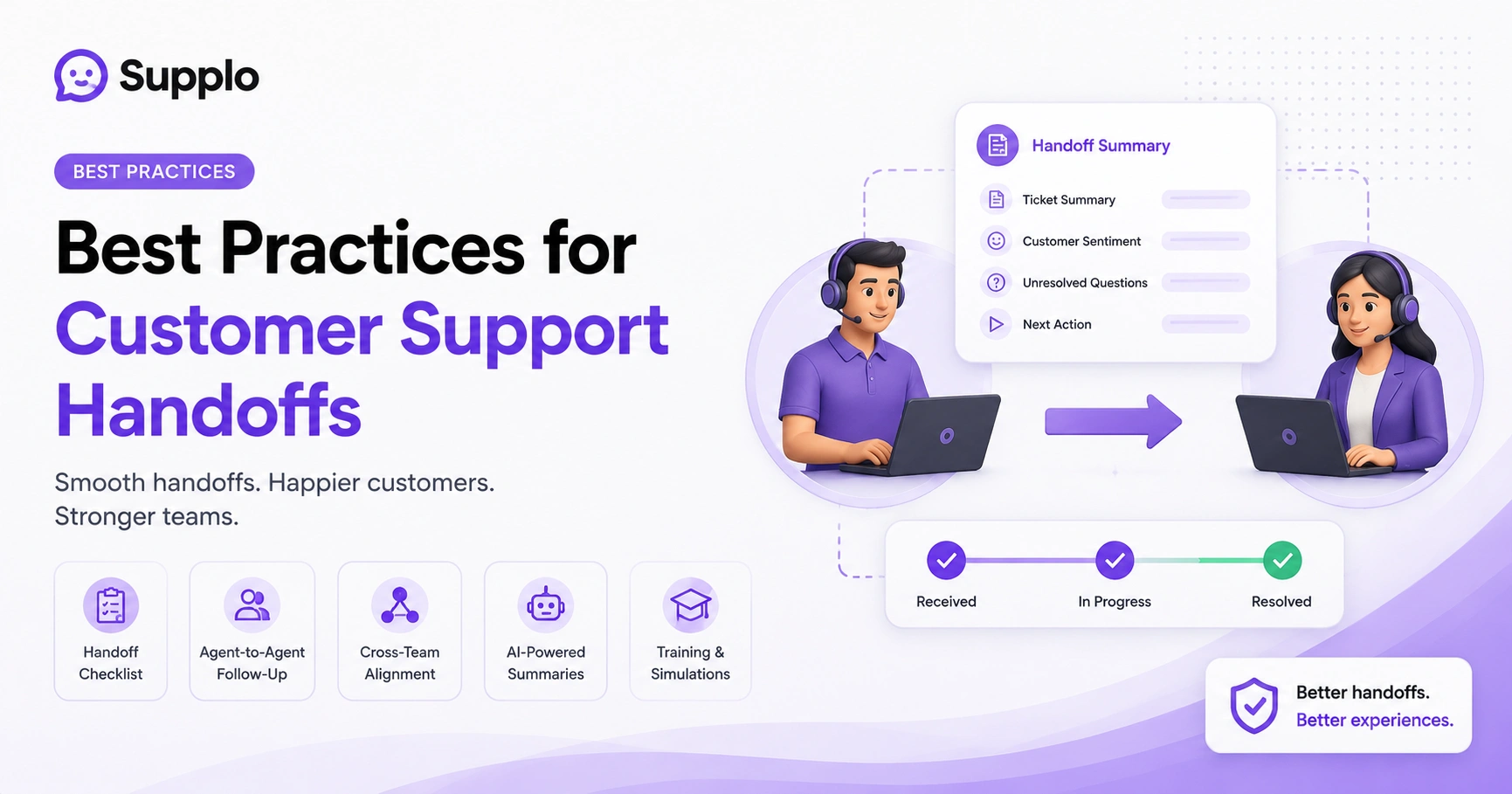
Analytics should tell you exactly when your AI is solving issues on its own, when it needs a human handoff and why. Track AI resolution rate, human escalation rate and what triggers the handoff. Then use that data to train both your AI and your team. Not just one or the other.
Measure the AI resolution rate: the percentage of chats resolved without human involvement. Analyse handoff reasons: classify why escalations happen (out of scope, sentiment, complexity). Use chat transcripts to build better knowledge base content for your AI agent that automatically resolves tickets. Review weekly analytics with both support ops and product teams.
Building a Live Chat Feedback System That Teams Actually Trust
The best feedback system is simple, immediate and anonymous for the customer, but transparent for your team. Use a post-chat survey (2 questions max: CSAT + open text) and share aggregated results in team dashboards. Avoid cherry-picking positive reviews; highlight learning moments from negative ones without shaming individuals.
Keep surveys to 2 clicks maximum to get decent response rates (15%+ is achievable). Tag negative feedback with specific categories (e.g., long hold, wrong answer). Run a monthly feedback review meeting where agents see their own trends. Never tie bonuses directly to CSAT scores; that invites gaming. Supplo's shared team inbox surfaces customer context from every channel so feedback is never siloed.
Common Pitfalls in Evaluating Live Chat Support and How to Avoid Them
The biggest mistake? Measuring everything at once and then ignoring the data. Others include benchmarking against the wrong industry, ignoring AI performance, or treating chat quality as a quarterly review rather than a continuous process. Avoid these by starting with 3 KPIs and iterating monthly.
Don't use first response time as a standalone quality metric. Avoid comparing AI vs human performance; optimise the system, not the individual. Don't survey customers who had a fully resolved AI interaction; they'll skew results. Also, don't ignore chat volume trends during product launches or outages. And remember: with pricing that doesn't balloon per seat, you can focus on quality without cost concerns.
Drowning in data but seeing no signal? Supplo's unified inbox brings together every ticket from email, WhatsApp, Telegram, Instagram and web chat into a single thread-based view. Stop patching together analytics from five different tools. Start your free trial →
Supplo is not affiliated with any app or website. Please follow each app's terms and local regulations.
Need chat support quality analytics that don't lie? Supplo's flat pricing ($0.04 per AI resolution, no per-seat fees) means you can measure quality without worrying about costs spiking as your team scales. Pay for what you use, with crypto, Binance Pay, GCash and more. Try Supplo for free →
Key Takeaways
- Prioritise Reliability: Focus on complete resolutions and minimal friction, not just speed, to build customer trust.
- Balance Metrics: Implement a mix of efficiency (FCR), satisfaction (CSAT, CES) and accuracy (resolution rate) metrics.
- Use a Sampled Approach: Create a quality assessment rubric and score a small, randomly selected sample of chats weekly to provide effective, unbiased feedback.
- Track Predictive KPIs: Monitor Repeat Contact Rate and Escalation Rate to understand customer retention and agent performance.
- Integrate AI and Human Analytics: Use data to identify where AI excels and where human intervention is critical, then train both accordingly.
- Avoid Vanity Metrics: Shift focus from easy-to-track but meaningless stats to outcome-driven indicators, such as resolutions per day.
FAQ
How often should I measure chat support quality?
Monthly measurement is ideal for trend spotting; weekly sampling is useful for coaching. Avoid daily scoring; it creates noise and agent fatigue.
What is the most important KPI for chat support quality?
First Contact Resolution (FCR) is the strongest reliability indicator. If you track only one metric, make it FCR; it correlates most strongly with customer retention.
Should I measure AI and human support with the same metrics?
Use the same core metrics (CSAT, FCR, resolution rate) but separate dashboards. AI metrics should also include deflection rate and human escalation reason.
Why do my CSAT scores not match my other metrics?
CSAT measures emotional satisfaction, not resolution. A customer can be happy with a friendly agent even if their issue isn't fully solved. Pair CSAT with FCR for the full picture.
What is a good benchmark for chat support quality?
Typical CSAT targets range from 80–90%, FCR from 70–80% and repeat contact rate under 15%. Always benchmark against your own past data first, then industry peers.
How do I handle negative live chat feedback?
Respond publicly (if in a shared channel) with a specific action plan, then resolve privately. Use negative feedback to update your knowledge base and agent training scripts.
Should I measure chat quality for every single conversation?
No, sample 10–20 conversations per agent per week. Random sampling reduces bias and is more manageable for quality teams. Automated scoring for every chat is only reliable with mature AI systems.
Compliance line: Supplo is not affiliated with any app or website. Please follow each app's terms and local regulations.