On this page
Here's the thing about negative reviews: they're not just complaints; they're opportunities. And the way you handle them tells potential customers more about your brand than the original one-star post ever could.
Think about it. When someone's browsing your business and stumbles on a bad review, they don't just read the complaint. They scroll down to see how you responded. Did you get defensive? Did you apologize? Did you actually fix the problem?
Quick Answer
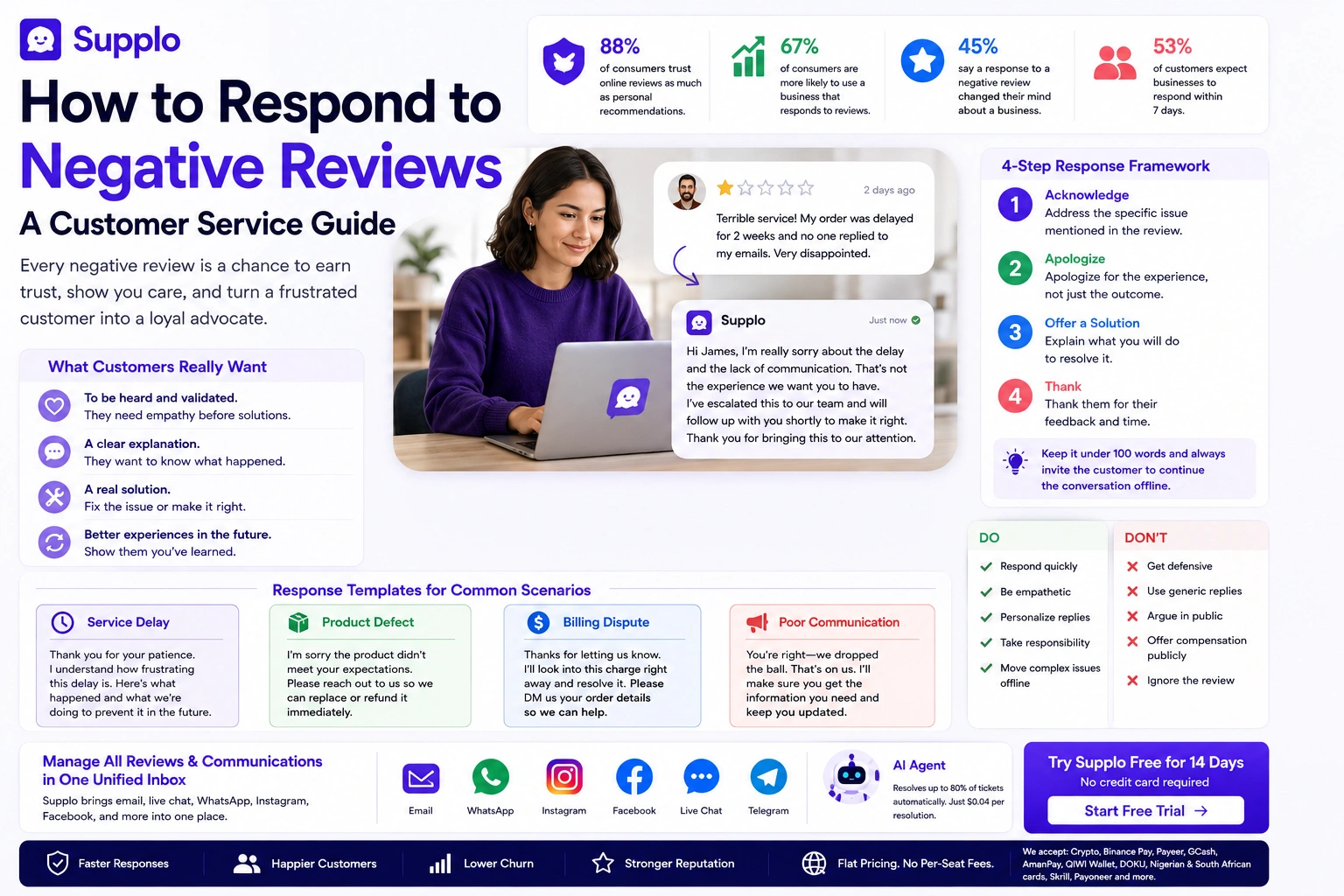
- 88% of consumers trust online reviews as much as personal recommendations, but your response shows them whether that trust is actually deserved.
- A thoughtful public reply demonstrates accountability and transparency. It says, "We care about fixing problems, not just making sales."
- A well-written response can actually reduce the negative impact of a bad review and improve conversion rates on that page.
- Ignoring negative reviews, or worse, leaving generic copy-paste replies, signals you're not listening. And that's often worse than the original complaint.
The Psychology of an Angry Customer: What They Really Want When They Write a Negative Review
Here's a secret most businesses miss: angry customers usually don't want a refund or a discount right away. What they actually want is to be heard. Validated. They want someone to acknowledge that their frustration makes sense.
When you understand this, everything changes.
- Most negative reviews come from feeling ignored or dismissed, not from the actual product flaw itself.
- Customers need emotional acknowledgment before they'll even consider a logical solution.
- Public complaints escalate when responses feel cold, scripted, or dismissive. Not because the issue was unsolvable.
- Mirroring the customer's language and genuinely validating their frustration can de-escalate the situation in a single reply.
How to Reply to a Bad Review: The 4-Step Framework That De-Escalates Every Time
A reliable framework keeps you calm and consistent, even when the review feels unfair. This structure works whether you're responding on Google, Yelp, Trustpilot, or social media.
- Step 1: Acknowledge the specific frustration they mentioned. Don't use generic language; reference what they actually said.
- Step 2: Apologize for the experience, not just the outcome. "I'm sorry you felt unheard" lands much better than "Sorry for the delay."
- Step 3: State exactly what you'll do to fix it or who will follow up. Vague promises erode trust fast.
- Step 4: Thank them for taking the time to share. This reframes the complaint as valuable feedback rather than a personal attack.
Keep public replies under 100 words. Longer conversations belong in private messages.
Customer Service Negative Feedback Response: Templates for Common Scenarios
Templates save time, but they can't sound like robots. Here are adaptable response structures for the most common types of negative reviews. Customize the specifics, keep the tone human, and always add a personal detail from their original review.
- Service delay: "Thank you for flagging this. I completely understand how frustrating waiting is. Here's exactly what happened and what we're doing to make it right."
- Product defect: "That's not the experience we want anyone to have. Please reach out to [team or link] so we can replace or refund this immediately."
- Billing dispute: "I appreciate you bringing this to our attention. Let me look into the charge and resolve it. Can you send your order details to [inbox/email]?"
- Poor communication: "You're right, we dropped the ball on keeping you updated. That's on us, and I'm personally making sure you get answers today."
Always end with an invitation to continue the conversation privately. Never resolve complex issues entirely in public.
Want to respond faster without sounding robotic?
Try Supplo's AI agent for free. It drafts personalized responses based on your knowledge base and past conversations, so you reply in minutes, not hours, no credit card required.
Start your 14-day free trial.
Strategies for Responding to Bad Reviews Without Sounding Defensive
Defensiveness is the fastest way to lose credibility in a public reply. Even if the customer is wrong, your job isn't to win an argument; it's to show everyone reading that you're reasonable, professional, and solution-oriented.
A few simple language shifts change everything.
- Replace "Actually..." or "What happened was..." with "I hear you, and here's what I can do to help."
- Avoid explaining why something went wrong unless you're also taking ownership. Context without accountability reads as excuses.
- Use "we" language instead of "you." "We clearly missed the mark on this one" sounds much better than "You misunderstood the instructions."
- If you need to correct a factual error, do it gently: "I want to clarify one thing so we can get this resolved properly."
- Never respond when you're emotionally activated. Write the draft, step away, then edit before posting.
How to Handle Poor Reviews When the Customer Is Wrong or Unreasonable
Not every negative review is fair, and that's okay. The goal isn't to appease someone acting in bad faith. It's to maintain your composure in public so reasonable readers see you as the trustworthy party.
You can acknowledge their perspective without endorsing inaccurate claims.
- Thank them for the feedback (even if it's inaccurate). This signals professionalism, not agreement.
- Politely clarify facts only once, then pivot to resolution: "Our records show X, but we'd still like to make this right."
- If the review violates platform guidelines (e.g., harassment, false claims), flag it; don't argue with it.
- Know when to disengage. If the customer refuses all attempts at resolution, a brief final reply protects your reputation.
- Remember: your audience in this scenario isn't the unhappy customer; it's the hundreds of people reading your response.
Tired of juggling review platforms, email, and chat in separate tabs?
Supplo unifies everything into one shared inbox: Google reviews, Trustpilot, email, WhatsApp, Instagram DMs, and your website widget. See every complaint in one thread, respond from one place.
See how the unified inbox works →
Managing Online Reputation: When to Respond Publicly vs. Take It Private
One of the hardest judgment calls in reputation management is knowing when to keep a conversation public and when to move it to email, chat, or phone.
Here's a general rule: public replies should acknowledge and validate. Private conversations should solve. Never negotiate compensation or admit liability in public comments.
- Respond publicly to show you're listening, then immediately invite them to DM, email, or a support ticket.
- Avoid sharing sensitive information (order numbers, personal details, refund amounts) in public threads.
- If the review is complex or involves multiple teams, a short public reply plus a detailed private follow-up works best.
- For social media complaints, respond in the thread once, then ask them to DM you for account-specific help.
- A good rule of thumb: if your reply has more than 3 sentences, you've probably overshared publicly.
Customer Service for Public Complaints: Handling Social Media and Review Platform Outbursts
Public complaints on Instagram, Facebook, or TikTok move faster and feel more personal because everyone's watching. The same rules apply, but your response needs to be faster, shorter, and more visible.
Speed matters more here than on review sites; aim for under an hour during business hours.
- Acknowledge publicly within 30-60 minutes during business hours, even if you don't have a full answer yet.
- Use the platform's native tools: reply to the comment, then direct them to DMs or your support inbox.
- Never delete comments unless they violate platform rules. Deletion escalates outrage and looks like hiding.
- If the complaint goes viral, post a calm, public statement before engaging with individual comments.
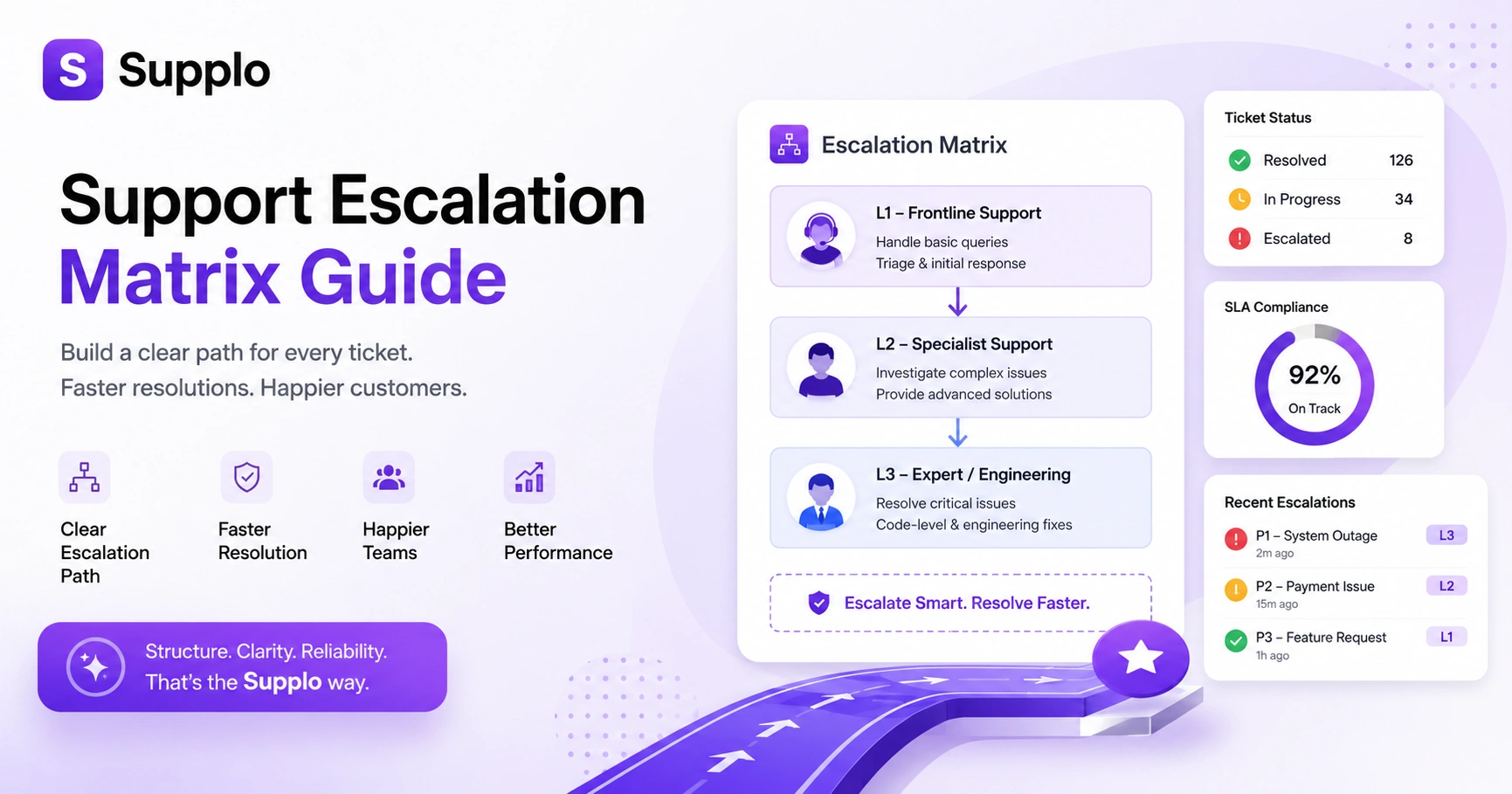
- Train your support team to recognize when a complaint is escalating into a reputation crisis. Have a clear escalation path.
How to Address Negative Reviews Publicly and Turn Them Into Wins
A negative review that gets resolved well can become your best marketing asset. Public follow-ups, "We fixed this, and here's what we learned", show accountability and continuous improvement.
Customers trust brands that admit mistakes and grow, not brands that pretend everything is perfect.
- Follow up publicly after resolving the issue: "Thanks again for giving us the chance to make this right."
- If the customer updates their review or rating, thank them again publicly. This reinforces good behavior.
- Turn systemic feedback into public improvements: "Based on this feedback, we've updated our [process/policy]."
- Case studies from negative-to-positive experiences can be powerful (with customer permission) for your website.
- Don't over-celebrate. The goal is humble improvement, not self-congratulation.
Customer Service Review Management: Building a System for Consistent, Fast Responses
You can't rely on memory and goodwill alone to consistently manage negative reviews. You need a system. A reliable one includes: a single inbox for all review platforms, personalized response templates, a triage process for urgent complaints, and clear ownership of who responds to what.
The system should make speed and consistency automatic.
- Centralize all review notifications (Google, Trustpilot, Yelp, social media) into one team inbox so nothing falls through the cracks.
- Create a response matrix: tier 1 (simple complaints) receive templated, personalized replies; tier 2 (complex issues) are escalated.
- Set SLAs: respond to all negative reviews on review sites within 24 hours and to social media complaints within 1 hour.
- Track trends: recurring complaints signal a product or process problem that needs fixing, not just responding to.
- Use a tool like Supplo's shared inbox to unify review responses, email, and chat into one thread-based workspace.
The Tool That Changes Everything: Using AI to Respond Without Losing the Human Touch
AI can draft responses, suggest tone adjustments, and flag urgent complaints, but it can't replace the judgment of a trained human. The smartest teams use AI to handle the speed part of review management while keeping the empathy part in human hands.
Tools like Supplo's AI agent learn from your past responses to draft replies that sound like you, not a robot.
- AI can auto-draft response suggestions using your knowledge base and previous replies; you then review and personalize them.
- Set up automatic notifications, so your team sees negative reviews immediately, even on weekends or after hours.
- Translate complaints from any language instantly so you can respond accurately without language barriers.
- Use the AI to detect sentiment escalation; if a customer sounds increasingly frustrated, flag it for human-priority handling.
- Supplo resolves up to 80% of incoming tickets automatically, handing off to your team only when a human touch is needed, and it costs a flat $0.04 per resolution.
- Learn more about Supplo's AI agent.
Supplo is not affiliated with any app or website. Please follow each app's terms and local regulations.
TL;DR Box
- Respond to all negative reviews within 24 hours, faster on social media, using a 4-step framework: acknowledge, apologize, offer a solution, thank them.
- Never sound defensive or negotiate compensation in public replies; take complex conversations to private messages.
- Build a system that uses a shared inbox and AI drafting tools (like Supplo) to respond consistently while maintaining the human touch.
- Turn resolved complaints into trust-building moments by following up publicly with what you learned.
Key Takeaways
- A well-crafted response to a negative review can turn one-star ratings into trust-building moments.
- Understanding the psychology of angry customers can de-escalate situations before they worsen.
- Use a 4-step framework to respond: acknowledge, apologize, offer a solution, and thank the customer.
- Templates can save time, but always personalize responses to avoid sounding robotic.
- Stay professional and solution-oriented, even when the customer is wrong or unreasonable.
- Know when to move conversations from public platforms to private messages.
- Handling public complaints on social media requires faster and more visible responses.
- Publicly addressing resolved negative reviews can boost brand trust and reputation.
- Implement a system for consistent, fast responses, using tools like Supplo's shared inbox and AI agent.
- Use AI to draft responses, but always review and personalize them to maintain a human touch.
FAQ
How quickly should I respond to a negative review?
Aim for within 24 hours on platforms like Google and Yelp, and within 1 hour on social media. Faster responses signal that you take feedback seriously and care about customer experience.
Should I ever delete a negative review?
Only if it violates the platform's policies (harassment, false claims, spam); otherwise, deleting reviews can backfire; customers notice and may repost the complaint elsewhere with screenshots.
What if the customer is clearly wrong in their review?
Politely clarify the facts once, then pivot to resolution. Your audience isn't the angry customer; it's the neutral reader who will judge both sides. Stay professional, not defensive.
Can I offer a refund or discount in a public reply?
Invite the customer to discuss solutions privately. Never negotiate compensation, refunds, or liability in public comments; it sets a precedent and invites exploitation.
How do I handle a review that uses profanity or personal attacks?
Flag it to the platform for policy violation. If it stays up, respond once, professionally, without engaging with the personal attack. A short, calm reply signals maturity.
Should my CEO or founder respond to negative reviews?
For high-profile complaints or reviews that specifically mention leadership, yes. Otherwise, a trained support or community manager is usually better; they're closer to the day-to-day issues.
Do I need to respond to every single review?
Yes, especially negative ones. Responding to 100% of reviews (positive and negative) signals that you're paying attention and value all feedback. Positive reviews deserve a thank-you too.
Is it legal to ask a customer to remove or update their review?
You can ask, but you cannot offer incentives (e.g., discounts or refunds) to remove a review. That violates FTC guidelines and platform policies. Focus on resolving the issue, not removing the feedback.
Compliance line: Supplo is not affiliated with any app or website. Please follow each app's terms and local regulations.