On this page
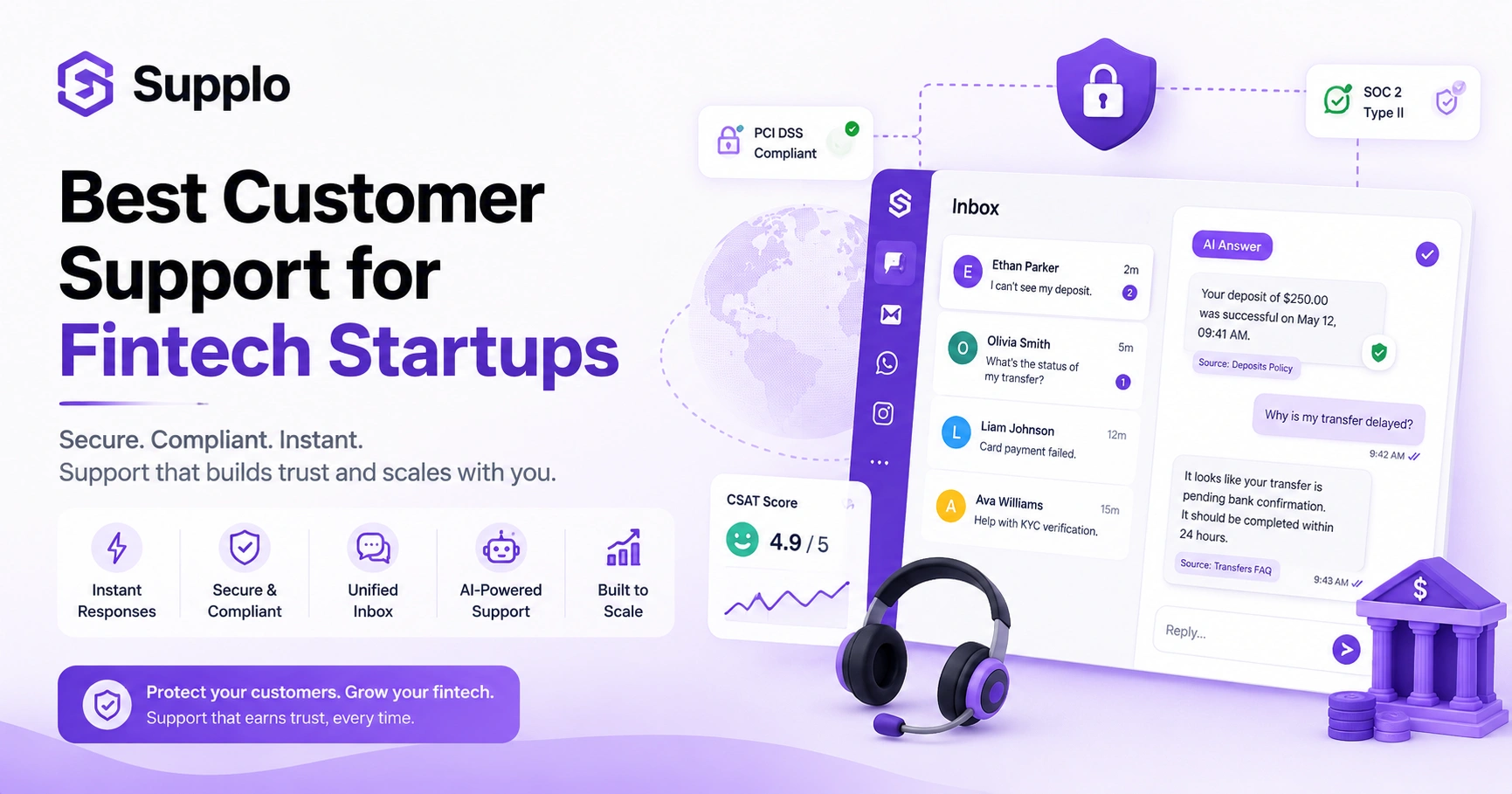
Fintech isn’t a forgiving space. Every missed message, every slow response, every half-baked answer about a transaction, it shakes the trust you’ve worked so hard to earn. That’s why customer support for fintech startups can’t just be a nice-to-have. It needs to be a core part of your risk management and growth strategy, built with compliance baked in from day one.
This guide is for founders, product managers and support leads who are starting to feel the strain of scaling. Maybe your current help desk was fine for the first hundred users, but now it’s cracking under the weight of financial queries, sensitive data and regulatory pressure. If you’re looking for a basic ticketing tool for a non-financial product, this isn’t your article. But if you need a support infrastructure that actually works for moving money, keep reading.
Quick Answer
- Fintech support needs tools built for compliance, security and instant, accurate answers, not repurposed e-commerce software.
- A good AI agent can handle roughly 80% of routine questions instantly, giving your humans room to focus on the sticky stuff.
- The best AI systems learn from your knowledge base and past chats, offering source-verified answers (no made-up nonsense).
- A unified, thread-based inbox keeps every customer conversation in one place, across every channel, without losing context.
- Flat-rate pricing means your costs stay predictable as your team and ticket volume grow, unlike per-seat or per-resolution models.
Why Fintech Customer Service Demands a Different Kind of Support Stack
Selling sneakers and managing someone's paycheck are not the same thing. Every time a support agent touches a fintech ticket, they're dealing with real money, real regulations and real anxiety. A generic help desk that works fine for a SaaS product will fall apart under the weight of financial services expectations.
Think about it: transactions are irreversible. One wrong answer about a wire transfer or a locked account and your customer is out of cash and you’re out of their trust. Regulators also expect a clean, auditable paper trail. Your inbox tool isn’t just a place to manage tickets; it’s an extension of your compliance framework. Customers want instant answers about their balances or failed payments, but they also need absolute privacy around their financial life. The best customer support for fintech startups treats every reply like a mini-audit, not just a box to check.
The Hidden Cost of Bad Startup Fintech Support And How to Fix It
Most founders don’t realize how much weak support is quietly draining their business. Churn is the obvious one, but there are also refunds, chargeback fees and the cost of replacing a user who left after a bad experience with their money. Financial products run on trust and a single unresolved ticket about a failed transfer can cost you not just that user, but everyone they tell.
Fintech users are impatient and for good reason. They expect an answer about their transaction in under 60 seconds: anything slower and their anxiety spikes. The emotional weight of money makes every negative support interaction hit twice as hard. Solving a problem when it’s small costs a fraction of what it costs later (refunds, chargebacks, re-acquisition). The best startup fintech support fixes problems before the customer even has to ask.
How to Fix It: A Checklist
- Prioritize Speed and Accuracy: Use tools that provide instant, accurate answers to common questions.
- Unify Channels: Manage every email, chat and social media message from one single thread-based inbox.
- Automate the Easy Stuff: Let AI handle routine queries like “What’s my balance?” so your team breathes easier.
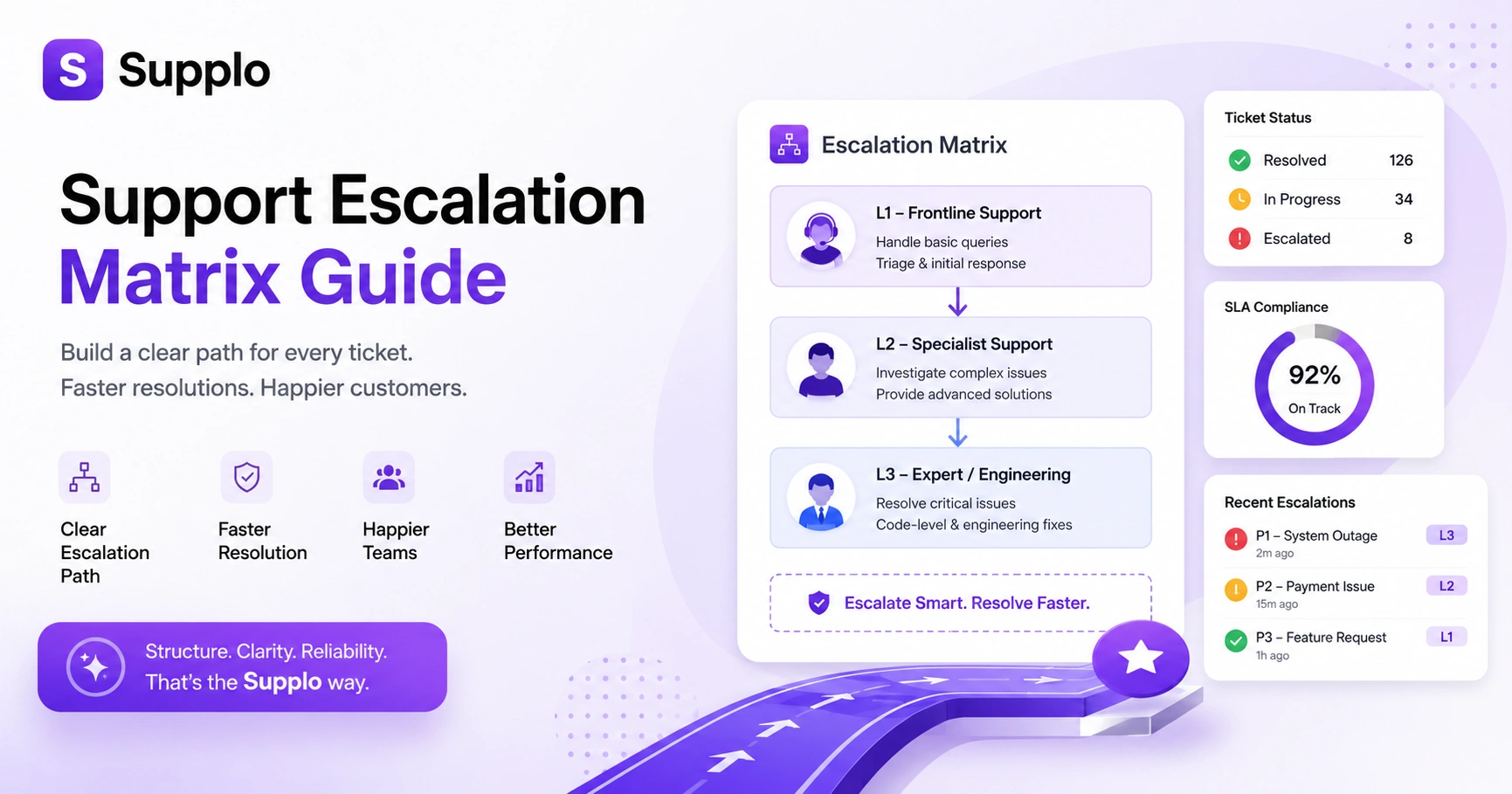
- Define Escalation Triggers: Be crystal clear on when an AI should hand off to a human (fraud disputes, account recovery, etc.).
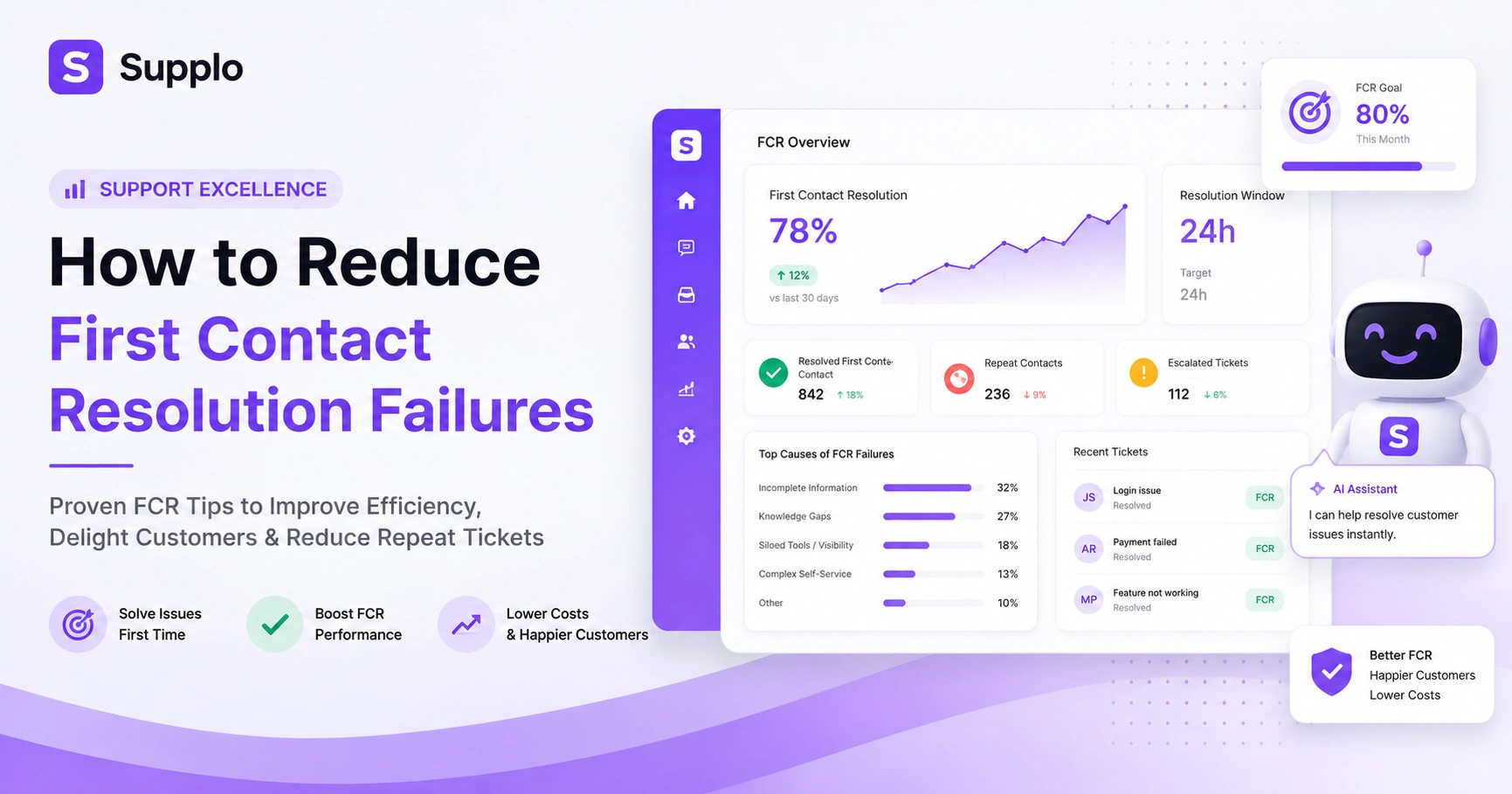
- Monitor What Matters: Track first-response time, resolution time, CSAT scores and support-related churn.
What Makes the Best Customer Support for Fintech Companies?
Speed is table stakes. What really sets the best customer support for fintech companies apart in 2025 is a blend of accuracy, compliance and scalability, without blowing your budget.
Users now expect AI to handle the boring stuff: balance checks, transaction status and password resets. But anything sensitive or nuanced should go straight to a trained human without friction. The gold standard is a platform that understands your specific product, learns from your data and never drops a message, whether it comes in via email, chat, WhatsApp, or Instagram DMs.
Accuracy trumps speed every time. A fast wrong answer in fintech is worse than a slow correct one. The best platforms bring all channels into a single thread-based inbox so context never gets lost. They also offer audit trails, message retention and role-based access. The real winner? An AI agent that learns from your knowledge base and your past conversations, not some generic script.
Fintech Client Support Solutions: Beyond the Chatbot Hype
AI is everywhere these days, but not all fintech client support solutions are built for the real world. The difference between a toy chatbot and a production-ready system comes down to one thing: does the AI actually understand your product? Can it handle multiple languages? And when it’s out of its depth, does it hang off cleanly?
Reliable fintech support doesn’t have black boxes or hallucinations. It doesn’t surprise you with hidden per-resolution fees. A truly effective automated support system pulls answers from your actual knowledge base and past ticket data, not a vague, general-purpose language model. Look for tools that automatically translate messages so you can support users in 200+ countries without a huge translation team. And pricing transparency is a must: flat-rate workspace pricing (not per seat or per resolution) keeps your costs predictable as you scale. The best fintech AI chatbot knows exactly when to say, “I don’t know,” and escalates to a human with full context in a unified thread-based inbox.
How AI Customer Service for Fintech Startups Handles the Compliance Tightrope
Compliance isn’t a “nice feature”; it’s a non-negotiable requirement for every single support interaction in fintech. AI customer service for fintech startups must handle PCI-sensitive data without storing it, provide a clean audit log and never, ever mix up one customer’s information with another’s.
A good AI support platform treats end-to-end encryption and data localization like table stakes, not upsells. It should automatically mask or tokenize sensitive financial data. Message retention is critical for audits, but you need to control exactly how long that data lives and who can see it. Look for platforms with role-based access so your team only sees what they need to resolve tickets, backed by solid role-based access controls and data audit trails.
Compliance line: Supplo is not affiliated with any app or website. Please follow each app's terms and local regulations.
Is an AI Support Chatbot for Fintech Startups Actually Trustworthy?
Yes, if it’s built for fintech. A trustworthy AI support chatbot for fintech startups doesn’t guess. It pulls answers from verified sources, flags its own uncertainty and never makes up information about balances, fees, or policies.
Trust comes from transparent design. The AI should show you its sources. It should admit when it doesn’t know the answer. And your team should be able to review and approve every reply before it goes live. A reliable fintech AI chatbot never answers a question it can’t verify from your knowledge base or historical conversations. When it does answer, it should be able to explain why it gave that answer, building trust in the process. Human oversight is built right in: you review flagged conversations, approve or correct replies and the AI learns from those corrections over time without needing constant manual retraining. It all works because it draws on source-verified AI answers from your own content.
If your current AI chatbot gives answers you don't trust, try a different approach.
Supplo's AI never guesses. It pulls every answer from your verified knowledge base, shows its sources and escalates when uncertain: $ 0.04 per resolution instead of $0.99, flat pricing, no surprises.
See how source-verified AI agents work.
Automated Customer Support for Fintech: Where the Handoff to Humans Still Matters
Automation can handle up to 80% of your incoming fintech tickets. That’s huge for your team’s sanity. But that remaining 20%, fraud disputes, account recovery and complex API issues, need human judgment.
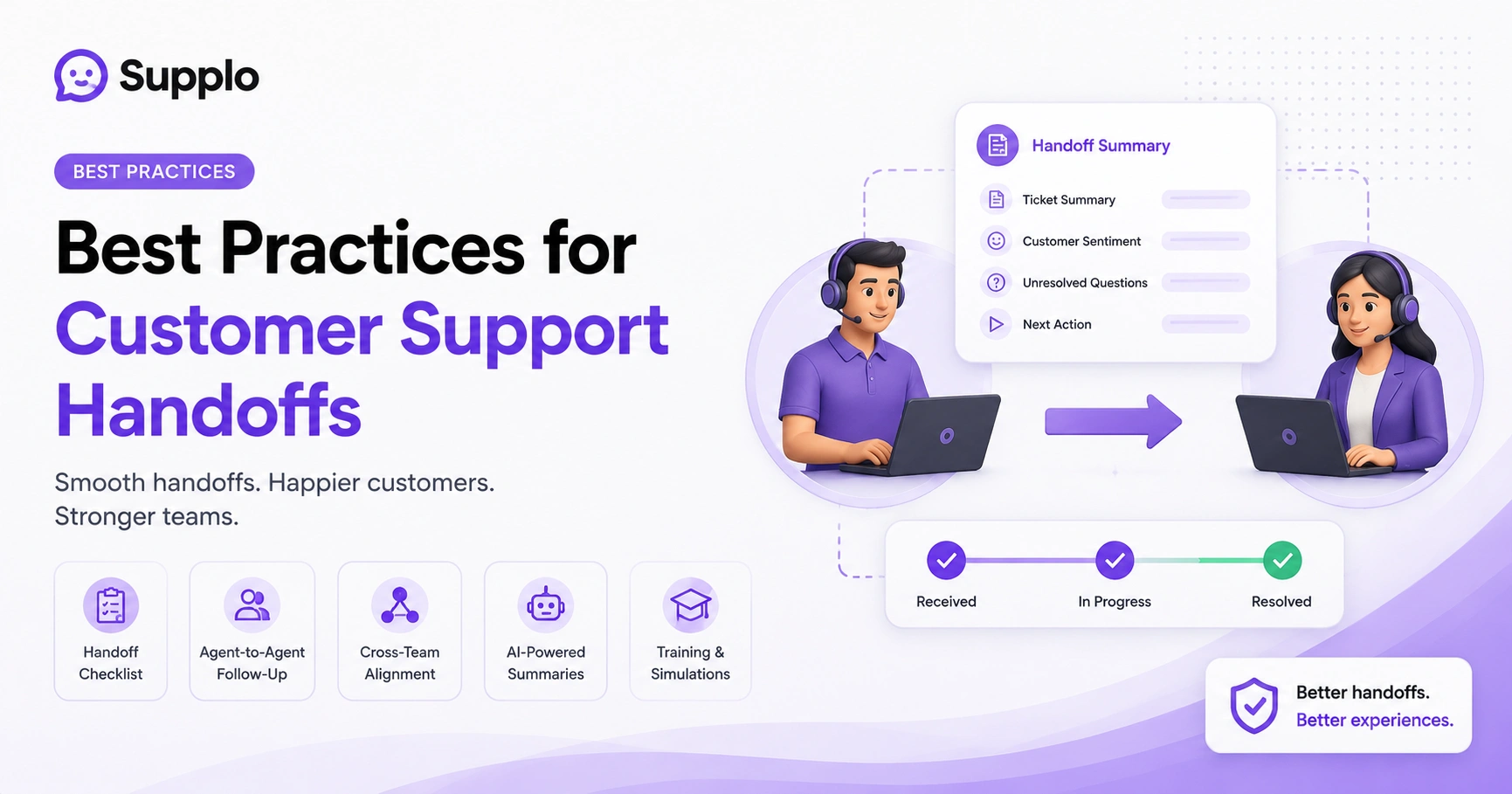
The best automated customer support for fintech systems doesn’t just escalate. It hands off with full context: the entire conversation history, plus what the AI already tried. The human picks it up without ever asking the customer to repeat themselves. This hybrid model is the only way to scale fintech live support without breaking the bank.
Always define clear escalation triggers. Transaction disputes, account lockouts, anything legal or regulatory, those go straight to a person. The handoff should feel seamless to the customer. They shouldn’t even notice they’ve moved from AI to human. Your support team should be able to see exactly what the AI told them before the AI takes over. Real-time chat for fintech startups means humans can jump in instantly, mid-conversation, without missing a beat.
Live Chat for Fintech Startups: Real-Time Chat That Doesn't Break Under Pressure
When a fintech user clicks “live chat,” they’re usually frustrated or anxious about their money. Real-time chat for fintech startups must be built with reliability in mind. No loading spinners. No “we’ll get back to you in 24 hours.” No dropped messages.
Your live chat widget should load instantly. It should let the conversation continue across devices. And it should work seamlessly with your AI agent to either answer immediately or quickly queue a human. The best startup fintech chat widget works across your website, mobile app, WhatsApp, Telegram and Instagram DMs, all from a single inbox. Remember, “real-time” doesn’t always mean an instant human response. It means the system responds instantly, even if the answer comes from AI. Reliability also means uptime: your widget should load quickly during traffic spikes, such as product launches or payment failures. A thread-based inbox prevents the headache of multiple agents accidentally tackling the same ticket. Build a real-time chat that works across websites, WhatsApp and Instagram.
How to Choose a Startup Fintech Chat Widget That Won't Leak Data
Your chat widget is a direct line to your customers’ most sensitive data. Security can’t be an afterthought.
The right widget runs on a fully encrypted connection, doesn’t store raw financial data in its logs and gives you granular control over what the AI can and cannot access. If a vendor can’t answer basic questions about data residency and encryption standards, walk away.
Choosing the Right Widget: Key Considerations
- Security Certifications: SOC 2 compliance (or equivalent) is your baseline.
- Encryption: Look for HTTPS-only connections and automatic session timeouts.
- Data Masking/Tokenization: Make sure your platform automatically masks or tokenizes sensitive data so it’s never stored in plain text.
- Granular Access Control: You need to define exactly which fields (account numbers, transaction IDs) the AI can reference.
- Data Localization: Especially important under GDPR or similar jurisdictions, your chat tool must allow you to choose where data is stored.
- Audit Trails: The system should provide a complete, searchable history of all interactions and data access.
Getting Started with Reliable Fintech Live Support Today
You don’t need a six-month implementation project to get reliable live fintech support up and running. The best modern support platforms are ready to configure in hours, not weeks.
Start by connecting your knowledge base, setting up your email and chat widget and letting the AI learn from your existing content. From there, you can add WhatsApp, Telegram, Instagram DMs and other channels one at a time as your team gets comfortable with the workflow.
Begin with your top 20 most-asked support questions. Train the AI on those first, then expand. Invite your support team to test the live chat widget internally before going public. Set clear escalation rules: let the AI handle the first response on routine tickets, route complex ones to humans. A flat-rate workspace pricing model keeps costs predictable as your user base grows. You can start your free 14-day trial to see if the solution fits your needs.
Test your own fintech support flow, free for 14 days.
Connect your knowledge base, add your chat widget and let the AI start resolving tickets immediately, no credit card required. See if the automation actually works for your specific fintech product before committing.
Key Takeaways
- Fintech customer support needs specialized AI tools built for compliance, speed and accuracy in financial contexts.
- Automation can handle most routine tickets, but smooth human handoffs are critical for complex issues.
- Trustworthy AI means verified answers, transparent sources and clear escalation paths.
- Data security, encryption and compliance certifications like SOC 2 are non-negotiable.
- A unified, thread-based inbox across all channels prevents lost context and improves efficiency.
- Predictable, flat-rate pricing helps fintechs scale support without budget surprises.
FAQ
Can an AI chatbot handle sensitive financial data safely?
Yes, if it’s built for fintech. The right platform encrypts all messages, masks sensitive data like account numbers and never stores raw financial information in logs. You control exactly what the AI can access.
What happens if the AI gives a wrong answer about a transaction?
A reliable fintech AI chatbot always cites its sources and flags uncertainty. If it can’t verify a transaction status from your knowledge base, it escalates to a human with full context, so the customer never gets a confidently incorrect answer.
Is automated customer support compliant with regulations such as GDPR or PCI DSS?
It can be, but only if the platform is built with compliance in mind. Look for end-to-end encryption, role-based access controls, configurable data retention policies and the ability to choose where customer data is stored geographically.
How do I know when to let the AI handle a ticket vs. handing it to a human?
Set clear escalation rules upfront: routine queries (balance checks, password resets, status updates) are safe for AI. Anything involving disputes, account recovery, or legal questions should route immediately to a trained human agent.
Can the AI support customers in multiple languages?
Yes. Modern AI customer service platforms automatically translate messages so your team can support global users without hiring translators. The AI understands and responds in the customer’s language based on your knowledge base content.
How long does it take to set up a fintech live chat system?
Most platforms can be configured in a few hours, not weeks. Connect your knowledge base, set up your chat widget and email integration and train the AI on your top questions. You can add more channels, such as WhatsApp or Telegram, as you go.
What if my support team grows? Will my costs explode?
Not if you choose a platform with flat-rate workspace pricing. Unlike per-seat or per-resolution models, flat pricing means your bill stays predictable even as your team and ticket volume grow.
Compliance line: Supplo is not affiliated with any app or website. Please follow each app's terms and local regulations.